

HOW DO YOU LIKE your Coltrane?
Last month marked the centenary of the birth of the long-striding saxophonist John Coltrane, in North Carolina. He was not, as far as I am aware, delivered in an outbuilding surrounded by farm animals plus the odd seraph. Nor was he a physical colossus. You may forgive yourself for being surprised to learn that the mighty, Rushmore-ready Coltrane measured a compact five feet nine inches in his socks.
Trane is big though. Whopping. His scale as an artist, hangs over the history of postwar jazz like the weather, from horizon to horizon, the roiling of distant thunder a perpetual reminder of the context of Coltrane’s ascent — in particular the Civil Rights movement, the bombing of Vietnam and the beginnings of the space race. That’s more than enough for most mortals.
And if you’ve been up with it in the jazzular sense these past decades, you will also be alive to the splendid African Orthodox Church of St John Coltrane in San Francisco, which considers the saxophonist, who died in 1967 of cirrhosis of the liver additional to the other usual nasties, to be an inextricable part of the Living God. Its services, “where music becomes prayer, worship and a pathway to the Living Spirit”, are robust and rackety and look to me like protracted exercises in the signalling of generosity and love as the cornerstones of virtuous living. Cool with me. Currently its webpage is adorned with a smiling preacher who enjoins her congregation to “Crucify the ego and present yourself as a living sacrifice” in aid generally of The Love Supreme. Wherever you venture in the Coltraniverse you encounter problems of scale.
What does “enormous” mean in an environment where a blood cell may be equated to a dying planet? How do we “see” as Coltrane sees? The answer is, don’t be daft — you can’t possibly see as Trane sees. But you can take the time to feel what you feel in response to this enormous music — not with any purpose in mind, mind, but with the intention embedded in all your thoughts as you do listen, not to think. I promise you nothing will emerge from the bell of Trane’s horn if you sit there analysing his harmonic strategies or constructing parables out of “Alabama”. You absorb him by allowing him, particle by moment by climax by cadential swoop by drifts and clusters of notes which happen to discover where your corners are; or you leave him well alone. He’s too vast to do anything else with.
Intimidating? Oh yes, certainly, although I very much doubt that was intentional on his part. But when you listen to Coltrane for the first time, as I did stupidly several decades ago by sitting solemnly in front of his canonical masterpiece, you must not involve your knowledge of what you think you like already (I fled and did not return for a good two or three years). You must come as an innocent, as one of the church of St John’s “living sacrifices” — and then you just let him happen to you. Simple as that. Simple as long as you don’t start with the difficult stuff.
Let his hard, ferrous tone knock you about a bit. It’s good for you; and that isn’t pain you’re feeling, it’s the very beginnings of the feelings that you will come to relish, once you’ve got your body and soul round the language. Let his phrases, which are as populous of notes as galaxies are of heavenly bodies … breathe into you … and then out again. Breathing is as important a thing as you will ever do. Go with the rhythm section — McCoy, Elvin and Jimmy — beneath the turbulent surface but also, crucially, of it. They will stay with Trane, and you should stay with them: it’s allowed, you know. Grooving is permitted. Trust the lads.
Although of course, notoriously, sometimes St John denies you access to any kind of groove you’d recognise as one, and that is a major pain in the arse. Barely spiritual at all. By the time you get to what the Experienced of the Coltraniverse like to call ‘Late Coltrane’, from 1965 to ’67, and John has achieved Ascension and is now ready for Meditations (or is it the other way round?), then you need to be braced. This is the artificially formless realm of “out” exploration, where Time has abandoned all changes, both harmony and modality have become unfundamental and Rashied Ali is hitting the drumskins as if he were sitting on the floor of his mother’s kitchen with all her pots and pans laid out upside down in front of him — and he is four years old.
Do not go into that kitchen. Not until you’re ready.
A CAUTIONARY TALE. I have a dear friend — once upon a time a very fine writer on music indeed — and he was, like many of us in our younger bodies, rather given to the penitential. Oh yes, he loved to suffer. And the time duly came when it became needful for him to do the Suffering by Coltrane, rather as Catholics are wont to do the Stations of the Cross. So he painted his bedroom white, removed all unnecessary trappings from his inner outer space and got stuck in to doing the entire Coltrane catalogue, in chronological order, over however many days it took, and presumably without sustenance but for a daily whelk and a bucket of saltwater.
And he did well, my friend. He sailed through Early Coltrane, and then Monk and Coltrane, gorged on Miles and Trane (not a whelk, nor any other thing that once lived cognitively has since passed his lips), navigated Atlantic Coltrane as if it were but a puddle and hit Impulse! Coltrane like a Dreadnought birthing itself into the River Clyde — which of course carried him hence and straight through the Canonical Masterpiece (A Love Supreme, 1964) as if it were a small sea fret. And in no time he was being tossed this way and that through the howls of Late Coltrane. This is no place for a Scotsman nor even a Fleming, and Scylla and Charybdis slipped their moorings in geology long ago and rocked off, tearing out their barnacles by the roots as they went, terrorised and deafened by the hullabaloo.
It was somewhere lost in the middle of Live in Japan, a huge set of LPs and a very expensive way to have a bad time, that my friend finally broke. And do you know? I must have heard the story ten times at least over the past forty years and he still hasn’t told me what actually happened in the middle of Live in Japan. All he has ever vouchsafed of his suffering has a been a repeated despairing shake of his noggin and a silent and self-reproaching smile. I can only suppose that he was carried out unconscious, stretchered on two repurposed end-lengths of recently whitewashed Ladderax.
To celebrate the centenary he says he’s doing it again, the pilgrimage, but this time he’s going no further than the end of the road: Early Coltrane. That’ll do for now. How are you getting on, I ask nervously, but he only smiles like a whelk and says: “Eurch,” semi-Scottishly. “Eurch, you know…”
But there is a way in and it’s the obvious way. No, not Kind of Blue, although you’ll have to do that marvel at some stage, if you haven’t already. Not even Miles Davis, I’m afraid, although there is no escaping Davis as you come to dig through the surface later on your journey and come face to face with the callow Coltrane lurching and bumping around the restricted space allowed in the horse box afforded by bossman Miles, in his First Great Davis Quintet of the middle 1950s, brilliantly recorded by Rudy Van Gelder for Prestige: Workin’, Steamin’, Relaxin’ and Cookin’.
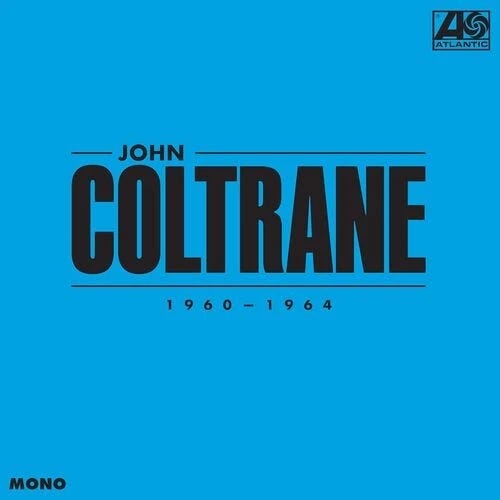
No, I think there is only one place to meet with Coltrane eye-to-bulging-eye, mano a mano, for the first time and that is bestriding the Atlantic Coltrane puddle I mentioned above. Some puddle. Essentially, it’s six albums recorded between 1960 and 1964, every single one of which is of merit, all of which expose the Coltrane methodology and Coltrane’s sound to the utmost scrutiny in the dry glare of chief engineer Tom Dowd’s studio arrangements. These are the glory days of the Coltrane Quartet. It’s hard to hold the thought that no one had ever entered this cave system before. It’s dark in there. Dark and dripping, and the walls are sheened with some other fluid you dare not finger and taste. But there are also shafts of light and sometimes even great illuminated chambers which open up in your mind all of a moment, places where your mind feels as if it ought to be quiescent. Instead it seethes. This is for the most part deeply austere music. Music that might be fit for an Anglican cathedral if it hadn’t already been sent down the mines. The iron, unwavering tone of Trane’s tenor is one of the towering vertical rockfaces in 20th-century music, unassailable, harder than compressed carbon and worth far, far more to my mind than any material ore.
The place to start? Coltrane Plays the Blues, mais naturellement. Where else should one start? But don’t forget that this is John Coltrane playing the blues, so they are blues absolutely like no other.
Rhino have reissued all six albums in their original monophonic (much weightier) mufti in a dinky CD box-set for fifty quid or thereabouts. The albums come individually dressed in facsimiles of their French cover designs, which are nothing like as pretty as the American originals. But then again, when has ‘pretty’ had anything to do with this music? Perhaps, My Favourite Things. But actually, no. Not even that. There are some things you just can’t say.
Nick Coleman is the author of three books which take music as their environment: ‘The Train in the Night: a Story of Music and Loss’, ‘Voices: how a great singer can change your life’ and ‘Pillow Man’, a novel — all three are published by Vintage / Jonathan Cape in the UK and by Counterpoint in the US. A fourth book, ‘Dreaming Music: Adventures in Time, Memory and Silence’, is to be published by Vine Leaves Press in 2027
Thanks, I really enjoyed this.
Nice 👍