
THE INTERIOR WORLD of a healthy fourteen year-old boy is not so much dark as histrionic. Upon a time, it was entirely normal for a young chap to attempt to purge the worst of his anxieties using music like this, the music experienced solitarily, intensely, the troubled soul sometimes edging into tears and hoping for release from dread as a consequence. Or lust. And here, right here was the cathartic burner: the blues smelted in a furnace, then bashed with hammers on an anvil till it had taken on a form that was almost Nordic in its grandeur — the stonk of high electrical amplification churning the howl of masculine self-pity into a sort of chorale.
They won’t like me for saying this though, the boys, but these were not real emotions, delivered up so sacramentally to the furnace of the hard-rocking blues; they were not emotions but attitudes towards emotion: the shape of confected emotion entertained by the nervous system as a Gestalt of manly feeling.
But so what if it was only shaped emotion? Shaped emotion is still better than no emotion at all. Way better. Just suppose there had been nothing at all of value that we were able to offer at the altar of teenage rock catharsis, back then when we were small, then where would we have been? Where would we be now?
‘Wagnerian blues’ might well be the oxymoron we’re looking for here.
If you accomplished your pubertal growth period, as I did, in semi-rural East Anglia as the 1960s ached into the 1970s, then you possibly listened to music like this, a couple or three years later, aged 13 or 14, perhaps not with a sense of deep personal connection but at least with frank recognition that it was speaking, yelling, storming at you, as if acting upon your behalf. 1971-74 is often characterised as the era of progressive rock’s brief apotheosis — and so it was. But there was always a shortfall or overstatement with prog, a certain esotericism attaching to the progressive idea that failed to meet the rawer aspects of a teenage boy’s inner gubbins. That was the job of heavy- or hard-rock, of which this music is a prime example; throbbing stuff that was essentially a sonic motorcycle for the soul: you did not listen to this music; you sat astride it and rode it out of the village, usually into a ditch.
The three capital heavies of what we might call the ante-generic-metal era were Black Sabbath, Led Zeppelin and Deep Purple. If you lived anywhere near trees and mud, you were required to sign up to appreciate one of them at least. I was not and have never been a great connoisseur of the heavy. At fourteen, my favourite band was the Rolling Stones; Free was the other one I really liked, and Bowie and the Faces/Rod filled whatever space remained along with a few tattered remnants of prog. In my case Yes, who were fleet not heavy. I just didn’t get the souped-down neuropathy of the Sabs. Deep Purple I did get, but their wind-tunnel woosh-rock did not impinge successfully for some reason — except maybe Made in Japan, occasionally. Led Zeppelin were the hard-rockers that tinkled my wind chimes. Oh yes. Their artful formalism, their adolescent anguish, which stuck out in front of them like a ram on a trireme, met my tragic sensibilities admirably, first with “Dazed and Confused”, then “Since I’ve Been Loving You” and finally, climactically, with a sustained episode of hyperventilation which only added to the real catharsis wrought by “When the Levee Breaks”. Their girders were of great durability and girth, their anguish palpably hormonal. I felt spoken to.
(Yelled at, really.)
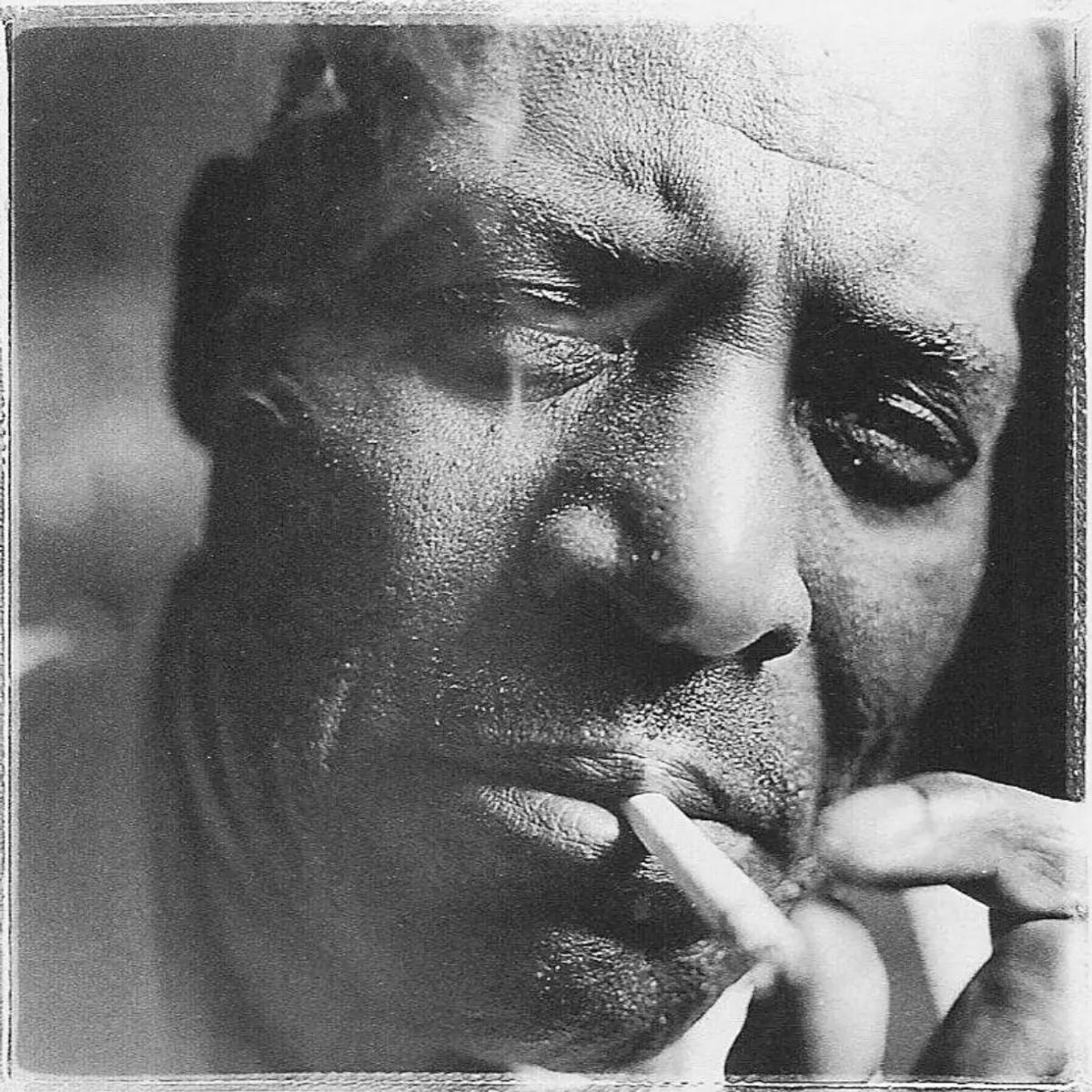
Then I heard “Mistreated” and thought Deep Purple’s Ritchie Blackmore had, for seven minutes at least, stolen a march on Zeppelin’s Jimmy Page, not as a widdly guitar virtuoso but as an open channel for the asymmetrical blues of Howlin’ Wolf. “Smokestack Lightnin’”: the blues as halt high drama; as howl-dark soul wilderness jagged with bolts of electricity, humming with fettered power. It remains the greatest single achievement of the entire pre-Beatles, postwar period: “Smokestack”, electrified in its full regalia with rhythm section and Hubert Sumlin on snaky guitar, recorded at Chess studios, Chicago in 1956. That was the source.
“MISTREATED” IS THE only Deep Purple song I’ve ever really liked. I liked it so much while I listened to it seventeen times in 1974 that when some likely lads did a 30th anniversary remix-remaster of it in 2004 for a ‘de-luxe’ reissue of the album it belonged to (Burn), I felt that an eighteenth listen might be in order, to see what fresh douceurs might have been uncovered in the clean-up. And let me tell you now that the remix-remaster was hugely impressive, in the way space had been cleared in the music to admit light to its murky corners, to separate the music’s constituent parts and above all to restore the silvery quack to Ritchie Blackmore’s Stratocaster tone, and so introduce a clarity and bite that had not been present on the thicker, more tongue-like guitar sound of the released original I’d wallowed in thirty years before.
By the time I got round to listening to it, another eight years later, I was fifty-two, so I felt altogether rather anachronistic. But, well, you know… I really wanted to hear it, not having crossed paths with the thing even accidentally-on-purpose in all those decades that had separated us. Lost lovers, we were. The remaster was impressive, but “Mistreated” in the likely lads’ hands wasn’t quite the same song somehow. It had lost its sinister implication. It was no longer so thickly thuddy, neither did it feel as if Ritchie Blackmore was sticking his tongue in your ear.
I am listening to it once more, right now, another thirteen years on from that prior engagement with the remastered version, when I’d been impressed but unswayed. I have gone back to the original as it is now available as a CD purchase or stream (I‘m not paying thirty quid or whatever for a super-duper LP vinyl version cut on a tungsten lathe insulated with powdered fairies’ wings, not for one solitary track). The chief difference between 2012 and now is that I am deaf.
Briefly, because some readers will be as browned off with reading this explication as I am with writing it, I lost all hearing in one ear in 2007, which caused problems in the surviving ear for some years afterwards. But it stabilised into monophony and all was reasonably okay for a while in the garden of music.
Then three years ago, for no immediately apparent reason, the widowed left ear went down too, with all hands. I was left with nothing, at least nothing worth having; not for a very long time. I was now categorised as ‘profoundly-severely’ deaf and that seemed to be that.
But not quite. They are stubborn and they fight, my ears and the Fat Controller, my brain. And over the past three years they have slugged their way back to a ‘profoundly-moderately’ functional status and, with special equipment carefully deployed and teeth gritted, I can listen to some forms of music in certain conditions, depending from moment to moment very much on the levels of interfering tinnitus and auditory hallucination. It sounds like shit, music, but at least it sounds like something.
So what of Ritchie B and his Fender Stratocaster, with its adapted pick-ups and special internal wiring, its scalloped fretboard and the huge (200-watt) Marshall amplifier which piled mahoosive levels of volume output through four Celestion 12inch speakers, after being subject first to the distorting effects of a double-barrelled treble-boosting unit, for added usable sustain, and an AIWA reel-to-reel somehow wired in early to function as preamp/reverb…?
Yes, what of it? Who cares what hardware was used to make that extraordinarily loud yet expressive tongue-in-your ear sound that issues from the Marshall right at the start of “Mistreated”? I have to say that I did care when I was fourteen, and even though I am now sixty-five and not so concerned by such things (and don’t hear the music truly anyway), I rather feel that I owe it to the fourteen year-old me, who is still inside me somewhere and who could after all hear the thing better then than I can now. So today I care, I really do. I care.
And what a thing it is too. Blackmore’s tone on the introduction of “Mistreated” is quite extraordinarily alive and ready. It brings panthers to mind. Poised, sinewy, tensile, with a slight edge of miaowing distortion when the string is struck hard and bent, and surprisingly clean when not. It has an interesting torquey feel to it too, which I can only attribute, in my authentic ignorance, to the effect of the AIWA. And you can tell it is really loud in the room despite its relative cleanliness — the amp has a cathedral-like “ceiling”; it just goes up and up and up…
Anyone who has ever picked up a Strat — and who wouldn’t, given the opportunity? — will know that if you plug one in to an amplifier with anything like a civilised level of signal output dialled in to its circuitry, the guitar will sound awfully polite. “Clean,” as guitar people say, slightly primly. Thin. Eloquently thin perhaps, like Mark Knopfler or Robert Cray. Or so you’d hope. But actually much weedier than that in your unaccustomed hands. Doubtless, with a season’s cultivation of your picking hand, and a good understanding of how the pick-up output knobs and switch on that luscious body can be made to work for you, you might get a clean Strat sound to “quack” a little. And of course with lots of practice, and a load of inhering musicality, you can make beautiful music with it. But you must understand that a Stratocaster really won’t sound anything like Jimi Hendrix until it’s been subject to all manner of expertly devised electronic tinkerings, all positioned cleverly at different stages in the amplification chain and requiring genuinely sophisticated manipulation if you’re to make the instrument speak at all.
And you really do need to have something to say with it too.
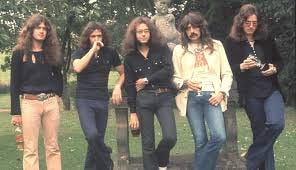
“MISTREATED” DOES REJOICE in the most sorrowful introductory instrumental hook it’s possible to conceive of — although I realise that “rejoice” is hardly the word for the occasion. This is the very stuff of lamentation. From the first micro-upbeat of the line, it’s as if all the sorrows of the world are being choked out of a single throat, the strange hiccupping emphasis of the metre bringing emetic force to what can’t be said, only expressed wordlessly through the vast howl projected by Blackmore’s Marshall. There is that torquey twist to the sound too which brings a slow subterranean drive to the music. We’re going down low and staying down.
B’h-DUH-waaaooow… B’h-DUH-waaaooow…
The simplicity of it is thrilling, the musicality of the articulation so deftly expressive that it is hard to believe that it is Ritchie Blackmore doing this, that most ill-tempered and self-absorbed of all 1970s rock guitar-virtuosos to wear a 17th-century sexton’s hat, and yet not actually be Jeff Beck. Blackmore’s guitar is a bell tolling. A soughing wind. A breaking heart. This is at the very least rock in stately form. It goes further though. It is funerary rock.
And then the rest of them join the doleful party of one, bass and drums clumping through a series of cadential thumps, Jon Lord seething away at his Hammond. This is beginning to sound like generic, off-the-peg Purple rock. But then we hadn’t bargained for the approach and entry of the very young singer David Coverdale, a brand-new member of Deep Purple and thoroughly inexperienced in just about any aspect of the high-end rocker’s studio craft you might care to humiliate him with.
Until only very recently Coverdale, with his lovely swish of hair, had worked in a boutique in Saltburn in Yorkshire somewhere and had been called to service to everyone’s surprise without a huge amount of bilious fusspottery from the man in the hat. Coverdale sent an audition tape and, boom! He was in.
Burn was his first time, bless him, and on “Mistreated” he was misfiring badly. Couldn’t get it. Either overcooked or underpitched the melodrama. Ugh. Shudder. Oh fuck it, man, I did it again! One can imagine him attempting to Paul Rodgers his way out of the mess, with grunts, and then Robert Planting it with squeals.
No, no, no, David!
You can imagine the twenty-year-old David on the edge of tears. Wanting, wanting, wanting to really get it and bang it in like a nail.
And I am utterly convinced that what then happened is this.
Someone — maybe kindly uncle John Lord (veteran keyboard player) or the other singer in the group, the equally young but much more experienced new bass player Glenn Hughes — someone suggested that David stop trying so hard and, you know, just sing the notes.
“Sing ’em really hard, ’cos you sound great when you sing hard. But don’t act. Don’t be too notesy — you know what I mean by that, don’t you? Yeah? Yeah. Just the right notes, David, as written. Really hard. And don’t think about fuckin’ Paul Rodgers, yeah? You’re not Paul Rodgers. You are David Coverdale. Sing the fuckin’ notes, not like you’ve got a hard-on for it but because you’ve got to hit the notes square on the head. Like a nail. Yeah?”
So that’s what he does. He sings the notes. Just sings them really hard, banged them on the head, just as if they were a nail. No acting or melismatic yodelling or squealing, just singing the notes. And it’s brilliant and, in a funny kind of way, it’s quite moving too. And as they gather in the control room for the playback to marvel at David’s superbly soulful performance, which wasn’t actually soulful at all, Ritchie Blackmore has a further thought.
He tugs an engineer and David to one side and says, almost kindly, “Er, David, that was great. You really hit it hard with a hammer, just like it needed. But I need you to drop in something more, a sound, a honk, maybe a grunt just a bit like Paul Rodgers — in between the lines in the second verse where you’ve gone quite funkily ‘been lookin’ for a wuh-man…’ just in there … before you do ‘To have and ho-o-old’ — just a little grunty sound, like you’re … not Paul Rodgers but really, really David Coverdale, yeah, and you’ve been looking for a woman? Yeah? Hit it really hard, man!”
So David returns to the vocal booth and the engineer goes back to open up the mic for the drop-in overdub and everyone waits while Coverdale prepares himself. He inhales deeply. And within very few seconds the deed is done. And David emerges from the vocal booth to a room that seems ready to burst its sides with pride and kindness.
“Unngh,” he says quietly and tosses his hair very slightly.
With grateful thanks to Mr LJ Staff, for lending me ‘Burn’ in 1974
Nick Coleman is the author of three books, all obliquely about music, all published by Jonathan Cape / Vintage in th e UK and Counterpoint in the US. They are ‘The Train in the Night: a story of music and loss’; ‘Voices: how a great singer can change your life’; and ‘Pillow Man’, a novel.
You are wise indeed, oh Plimmer. Anything longer than the three twangs in the style of Chet Atkins bungled by George for the Beatles’ standard instrumental interlude is always otiose. But I must defend myself and Mr Blackmore in this instance. We are not addressing ourselves here to a guitar solo: we are contemplating a “guitar introduction” which is a different kind of building altogether. An introduction needs walls, ceilings, alcoves and priest holes and may not be scoffed out of the room for excessive length. It has a job to do and is not an indulgence but a necessity in its presence within the form. Are you familiar with this, I wonder? https://youtu.be/F6tH5gCgeR4
As, now, an old man with the benefit of many years of accumulated listening wisdom, one thing I’ve learned, is that nearly every guitar solo is too long.